
Key facts
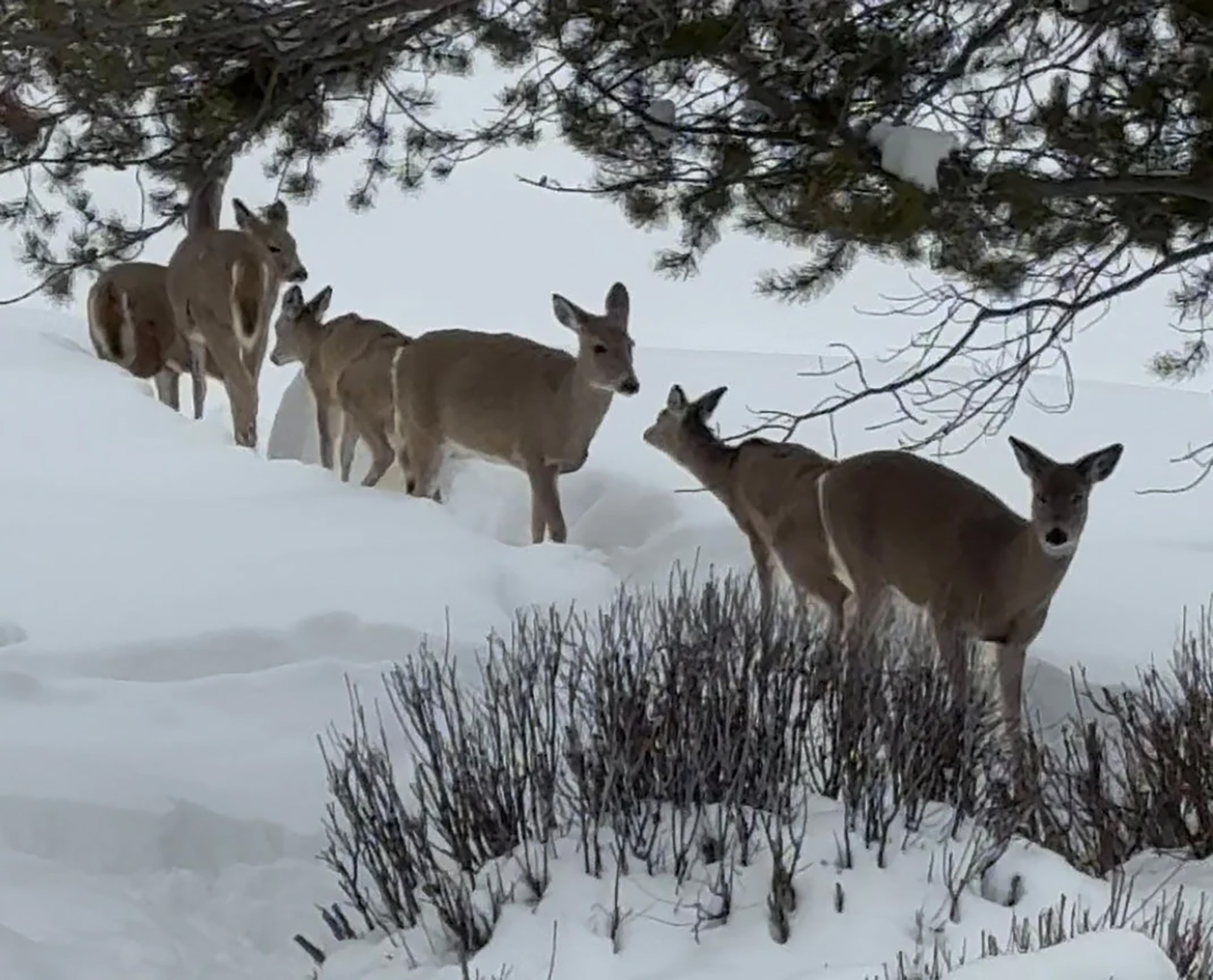
The Wyoming Game and Fish Department is shrinking the population of white-tailed deer in the Jackson region to “little to no” animals due to concern about a growing population and the spread of chronic wasting disease in northwest Wyoming.1
The department delivered a CWD update to the Wyoming Game and Fish Commission earlier this month.1
The strategy came out of a 2020 plan from the department to manage CWD, an always-fatal, highly transmissible neurological disease in ungulates, said Sam Stephens, the department’s wildlife biologist for the South Jackson region.1
A 2020 Plan for Managing CWD
That plan called for trying to reduce concentrations of deer irrespective of species, but decreasing white-tailed deer populations in particular is “low-hanging fruit,” Stephens said.1
Wildlife managers are concerned about white-tailed deer on elk winter range, as CWD can be spread through environmental contamination from urine, feces, blood and saliva of infected animals.1
Wildlife managers first detected CWD in the Jackson Elk Herd in a hunter-harvested cow in 2020.1
The National Elk Refuge detected its first two cases last winter.1
Observations and Testing
Department staff collected 44 observations in the Jackson region between 2000 and 2010, which leapt to 300 between 2010 and 2020, Stephens said.1
Department staff collected another 200 observations in the six years since.1
The highest concentrations are along river bottoms, such as the Snake River between Wilson and South Park, the lower Gros Ventre River and parts of Star Valley along the Salt River.1
Only two white-tailed deer in the Jackson region have tested positive in the past few years.1
Real prevalence could be higher as the department can only sample dead animals.1
Statewide, white-tailed deer had the highest CWD prevalence of any big game species in the state last year, with 25% testing positive.1
White-tailed deer are non-migratory and occupy a 10-square mile home range.1
Migrating buffers mule deer from disease transmission, as they use a larger landscape rather than staying concentrated in one area.1
Resident mule deer populations are as likely to have CWD as white-tailed deer.1
The department has liberalized white-tailed deer in the Bighorn Basin, doubling or tripling quotas in some hunt areas and allowing the season to run all fall through December.1
It’s difficult to track the effect of those actions on CWD, as wildlife managers have to measure prevalence over a long period of time.1
It’s not a bad idea to keep white-tailed populations low, said Kyle Richardson, an assistant professor of wildlife ecology at University of Montana Western.1
It’s “simple disease ecology” that as populations decline disease declines, Richardson said.1
“In large parts of the state, we surveyed the public about what they will tolerate in terms of CWD management actions, which are not often popular,” Stephens said. “Aggressive white-tail harvest is one of the most supported management actions.”
“A lot of their historic population swings have largely been governed by winter severity,” Stephens said. “We’ve really seen that shift in population and abundance really post 2010.”
“Nobody wants to see white-tailed deer eradicated from an area, or elk, or anything else,” Richardson said. “But at the moment we’re so in the dark about methods of control for this. There aren’t a whole lot of options.”