


Key facts
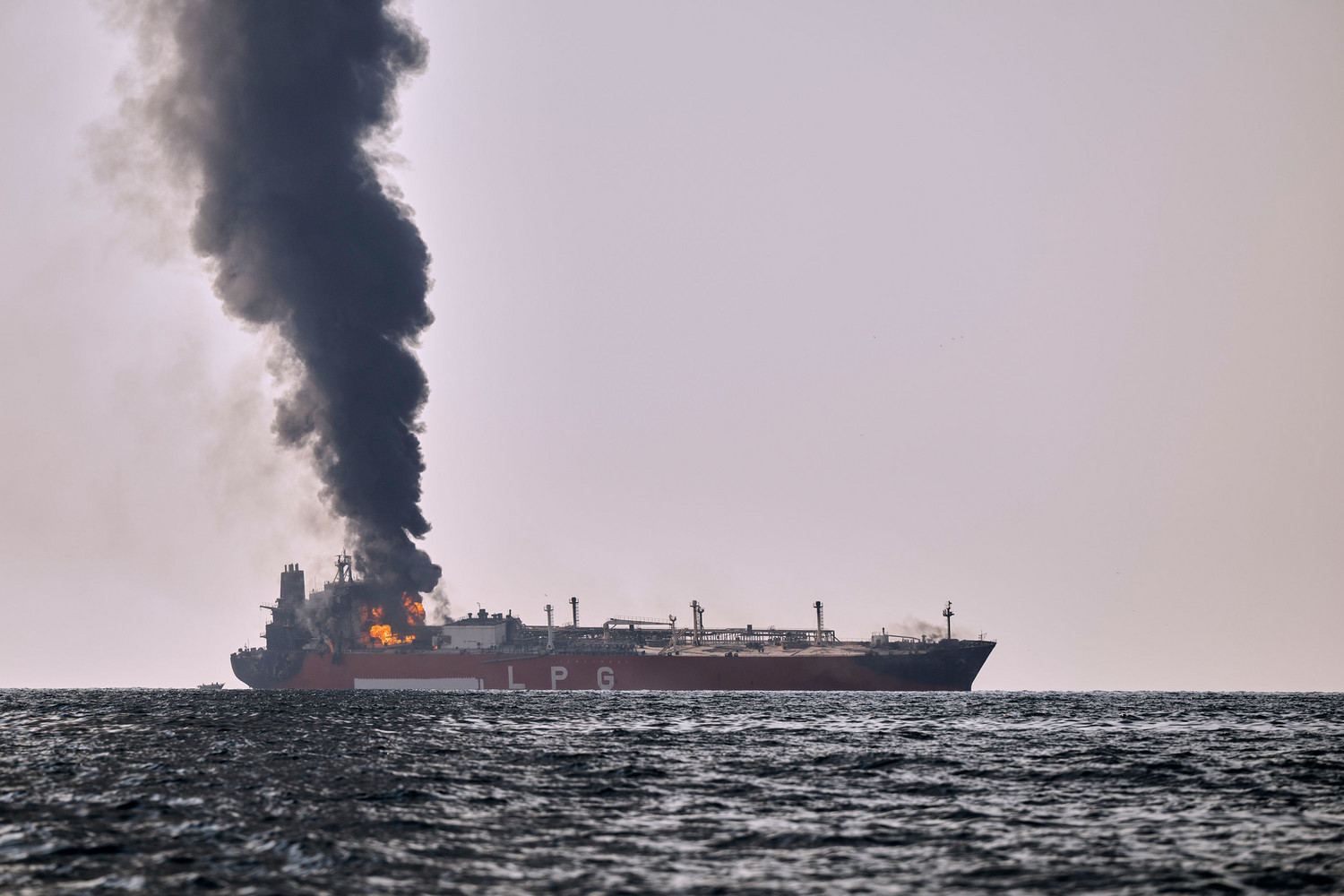
Reported attacks on shipping in and around the Strait of Hormuz are at the highest levels since the Iran war began, maritime data shows, as Tehran seeks to re-exert its control over the critical waterway amid falling oil prices.1
The Iran war began in late February.1
As of Sunday, at least 22 attacks were reported in November, the second highest figure since the war began, according to a CNN analysis of UKMTO data.1
The reporting area covers the Strait of Hormuz, the Persian Gulf and the Gulf of Oman.1
A sharp rise in attacks
In October, the number of attacks reported to the Royal Navy-affiliated United Kingdom Maritime Trade Operations Centre (UKMTO) exceeded 30 for the first time since the US-Iran war began.1
Before October, the number of reported attacks in the region averaged around 10 per month.1
Data from the International Maritime Organization points to October as having the highest number of confirmed incidents so far this year.1
Why Iran is hitting harder
Iran began trying to halt traffic in the wake of the US-Israeli attacks that launched the war.1
In response, the US imposed a blockade on Iranian ports, and as CNN previously reported, Gulf producers have found ways of getting ships through the strait.1
Commercial traffic through the channel – through which a fifth of the world’s oil passed before the war – remains at a reduced level when compared to the 2025 baseline.1
As global oil prices fall and the Iran’s domestic crude revenues come under increasing strain, Tehran has been stepping up attacks, with experts saying the country is losing its leverage over the waterway and could escalate attacks further in an attempt to force concessions from Washington.1
The International Energy Agency attributes the recent decline in oil prices to a recovery in Gulf exports.1
Prices also fell after the US midterm results as concerns over fresh US military action in the Middle East subsided.1
Hamidreza Azizi, a senior Iran analyst at the International Crisis Group (ICG) think tank, told CNN, “Markets appear to be increasingly assuming that a return to full-scale war is unlikely and that oil supplies will gradually recover.”1
Tankers struck in Hormuz
During the latest attacks, projectiles struck three tankers exiting the strait on Friday and Saturday, according to Marisks, a maritime risk management company.1
Marskis did not confirm who was behind the attacks, though it said Iranian involvement was “assessed as likely.”1
Fire erupted aboard the Captain Leon, a Marshall Islands-flagged chemical and oil tanker, after it was struck at the bow at 3 p.m. UTC (10 a.m. ET) on Friday.1
The Torkel, a Hong Kong-flagged crude oil tanker, caught fire after being hit in the stern at 5 a.m. UTC on Saturday (midnight ET on Saturday).1
Oil revenues fall
Meanwhile, Iran’s domestic oil revenues are falling sharply as the US blockade of Iranian ports continues to stifle the country’s supply of oil to global markets, according to maritime data tracking service Kpler.1
Kpler reported in late October that Iran’s oil revenues could drop to zero by mid-December.1
Iranian oil on water outside the (US) blockade zone has hit zero as the last cargoes discharged in China earlier this month.1
US President Donald Trump said this month the US doesn’t “need a deal” with Tehran and ordered Vice President JD Vance to turn his focus elsewhere.1