
Key facts
- The plane stayed on the ground during the Weatherford ammonia leak, the Port Arthur fire and the Toledo blasts1
- It has responded to seven emergencies since early 2021, including the East Palestine derailment and the Smitty’s Supply fire1
- The EPA’s Office of Inspector General is auditing the East Palestine response, and the agency says the sensors are wearing out1
When an ammonia leak outside a hotel in Weatherford, Oklahoma, injured 74 people last November, the federal government’s chemical-detection plane stayed on the ground.1
When a fire tore through a Valero refinery in Port Arthur, Texas, in March, the plane sat idle.1
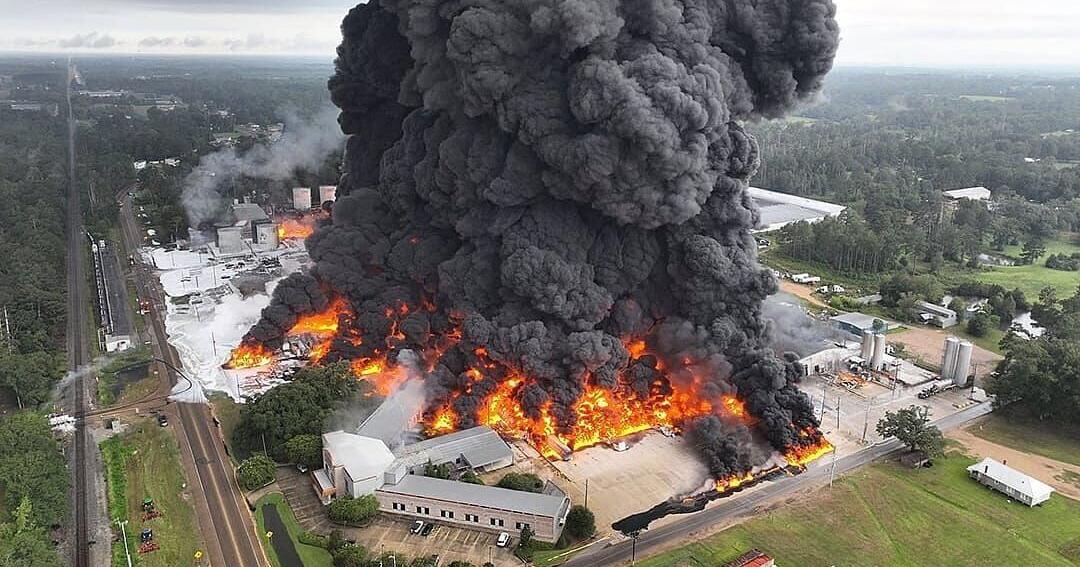
And when massive blasts killed two workers at an industrial recycling plant in Toledo, Ohio, in August, it stayed put, despite a fire surrounding tanks of flammable solvents.1
Mark Thomas, a former EPA official who for years managed the airborne detection effort, said, “Ten years ago, it would have gone to all of them.”1
A program built for disaster
For more than two decades, the plane has flown over many of the country’s worst disasters, from New Orleans after Hurricane Katrina to the deadly West Fertilizer explosion in Texas to the Deepwater Horizon oil spill in the Gulf of Mexico.1
The country’s need for a chemical-sensing plane grew from the smoldering, toxic debris in Manhattan on Sept. 11, 2001, when the EPA’s monitoring trucks were stranded on the wrong side of the Hudson River, unable to cross after bridges and tunnels into the city closed.1
Robert Kroutil was a program manager for the Department of Defense at the time, leading a research team that had developed the technology that would become ASPECT, short for Airborne Spectral Photometric Environmental Collection Technology.1
The military transferred the program to the EPA for use in detecting hazardous chemicals during civilian emergencies.1
For 72 hours after Hurricane Katrina struck, it was the only emergency response aircraft flying over New Orleans, where it helped locate a missing 55-gallon drum of potentially lethal chloroacetic acid.1
Seven emergencies since 2021
But since early 2021, the single-engine Cessna has responded to just seven emergencies.1
Two of those missions were the 2023 train derailment that sent toxic clouds over East Palestine, Ohio, and the 2025 fire at Smitty’s Supply in Louisiana.1
At Smitty’s, the EPA declared the air safe, but a former ASPECT scientist later found toxic chemicals the agency had missed.1
The agency’s Office of Inspector General is now auditing the response to the East Palestine derailment, including the data behind its public assurances about air quality.1
The plane’s systems can’t identify chemicals within minutes, as designed.1
The process takes about a week instead of minutes.1
The EPA said the plane’s chemical sensors are wearing out and expects replacements to be working by mid-2027.1
Five people who helped build and run the program told Floodlight that the EPA is fixing the wrong problem.1
The old sensors still work, according to the five people.1
Replacing the old sensors could leave the EPA even less capable of detecting hazardous chemicals in an emergency, according to the five people.1
Kroutil, a longtime ASPECT scientist who helped develop the program and later became a whistleblower, said, “I fear that the public is at risk.”1 “It’s such an important program, and they’ve allowed it to waste away to nothing.”
The EPA did not respond to Floodlight’s requests for an interview or questions about ASPECT’s decline, its handling of emergencies, the replacement of its sensors and allegations of mismanagement by former program scientists and managers.1